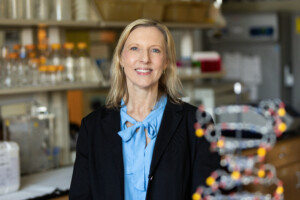
By Juliane Strauss-Soukup, Associate Vice Provost for Research and Scholarship at Creighton University.
 Creighton University is a critical partner in growing the State of Nebraska. 80% percent of Creighton’s undergraduates come from outside Nebraska, and half of all undergraduates stay in our state after graduating, expanding our workforce, innovation, and putting down roots in our communities. Creighton is a true partner in bringing brain gain to Nebraska.
An integral part of Creighton success is the support we have received from the Legislature and State of Nebraska in appropriations provided through the Nebraska Health Care Cash Fund for biomedical research. This partnership promotes brain gain and attracts high-caliber scientific researchers and projects to our state.
Biomedical research funding is a magnet for recruiting top talent, providing early-career faculty with essential support to collect preliminary research data that strengthens their federal funding proposals. Last year at Creighton a $1.16M investment in Recruitment, Retention and Research projects resulted in $15M of external funding, with a return on investment of about 13 to 1. Additionally, these funds enable faculty to support technicians, research associates, graduate and undergraduate students, boosting job opportunities in science across our state. Currently this funding actively supports over 20 Creighton researchers.
By investing in biomedical research, we are investing in Nebraska’s future. These funds create high-quality jobs, stimulate economic growth, and enhance our state’s reputation as a leader in scientific innovation. Some of those areas of excellence at Creighton are focused on the health of Nebraskans and include hearing & hearing loss research, the emergence of tick-borne diseases (e.g. Lyme disease, which is a new issue for Nebraska), and research on neurological prion diseases that threaten livestock and wildlife such as deer. We also study the emergence of bacteria that are resistant to conventional antibiotics, the higher death rates from asthma in NE, and hereditary cancers.
Competition for top researchers is fierce. While outstanding candidates receive offers nationwide, the support and stability of the health care cash fund makes Nebraska a more compelling choice. And when we recruit new faculty, they frequently arrive with a spouse and children, further enhancing our state’s health and economy.
Simply put, this funding is an investment that produces consistently strong returns and is a catalyst for innovation and growth in Nebraska.