
 Nearly twenty years ago, I began my career as a young professor in biomedical engineering. I was excited, full of ideas, and eager to make a difference—but I also faced the uncertainty that comes with starting a new research career and the pressing need for support to build my lab. However, everything changed when I received my first research grant. That support did much more than fund a single project in my lab. It helped launch a series of opportunities—for me, for my students, and for the broader field. It opened the door to discoveries that are now closer to becoming life-changing technologies. It helped train students who are now engineers, clinicians, innovators, and educators.
Experiences like mine, repeated in hundreds of academic labs each year, highlight the essential role of biomedical research funding—not just in developing and advancing medical therapies, but also in driving the intellectual and economic engine of our nation.
Too often, conversations around biomedical research funding focus solely on the end goal of new treatments or technologies. While those outcomes are critical, they’re only part of the story. Research funding has a broader and more immediate impact: it creates jobs, fuels regional economies, and educates the next generation of scientists, engineers, and innovators.
Biomedical engineering lies at the intersection of medicine, biology, and engineering. Breakthroughs in this field—from smart prosthetics and wearable diagnostics to tissue regeneration and targeted drug and gene therapies—depend on sustained, forward-thinking investments. But research doesn’t happen in isolation. It takes place in university labs supported by grants that fund not just equipment and materials, but, more importantly, people. These grants support local employment— from students and postdoctoral fellows to research staff and lab technicians—and drive demand for nearby businesses that supply materials and services. They stimulate local economies and generate new knowledge that can lead to patents, startups, and industry partnerships. Many of today’s most promising medical startups began as student-led projects in university labs funded by modest research grants.
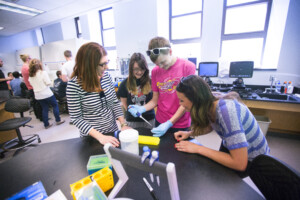
Equally important is the educational impact. Research funding is a powerful teaching tool. In the lab, my students learn to think critically, solve real-world problems, and collaborate under the pressure of deadlines and discovery. These are skills that extend well beyond the lab. They help shape future leaders, whether in industry, healthcare, academia, or public service. Without continued investment in their training, we risk losing a generation of talent and delaying scientific progress.
In my own lab, that first grant supported several graduate students— many of whom are now leaders in science, medicine, and entrepreneurship. They were trained not only in science and engineering, but in perseverance, teamwork, and critical thinking. Their successes reflect the true return on investment that federal and state funding provides—not just in discoveries, but in people.
At a time when we face mounting healthcare challenges and growing global competition in science and technology, sustained investment in biomedical research is not just an academic concern. It is a strategic economic policy, a workforce development priority, and a public health necessity.
My career—and those of countless others—began with a single research grant. Across the country, thousands of researchers depend on this to explore bold ideas, train future scientists and leaders, and make discoveries that shape our future. Investing in biomedical research is investing in a healthier, more innovative, and more resilient society.
Angela K. Pannier is the Swarts Family Chair of Biological Systems Engineering at the University of Nebraska – Lincoln.